Hammersmith bride case study florist before and after bouquet
Posted on 05/10/2026
If you are looking at a Hammersmith bride case study florist before and after bouquet, you are probably doing one of two things: checking whether a florist can really transform your ideas into something beautiful, or trying to work out what "good" wedding flowers actually look like in practice. Fair enough. Photos can flatter, briefs can sound lovely on paper, but the real test is what happens from first conversation to finished bouquet in a bride's hands.
This guide walks through the whole thing in a grounded, useful way. You will see why before-and-after bouquet case studies matter, how the process usually works, what to look for when comparing florists, and where people most often go wrong. There is also a practical checklist, a comparison table, and a realistic example set in Hammersmith so you can judge the details with more confidence.
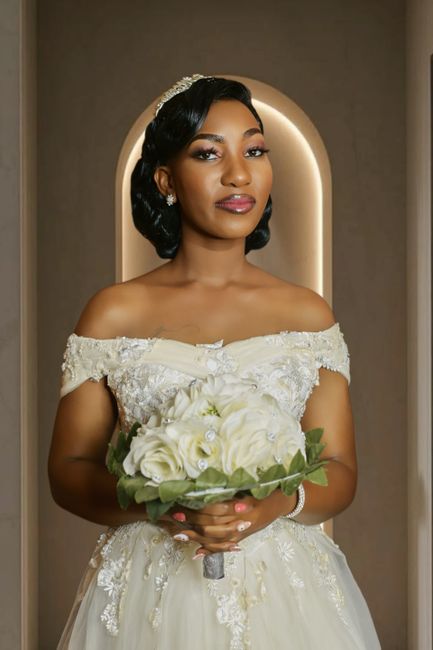
Table of Contents
- Why Hammersmith bride case study florist before and after bouquet Matters
- How Hammersmith bride case study florist before and after bouquet Works
- Key Benefits and Practical Advantages
- Who This Is For and When It Makes Sense
- Step-by-Step Guidance
- Expert Tips for Better Results
- Common Mistakes to Avoid
- Tools, Resources and Recommendations
- Law, Compliance, Standards, or Best Practice
- Options, Methods, or Comparison Table
- Case Study or Real-World Example
- Practical Checklist
- Conclusion
- Frequently Asked Questions
Why Hammersmith bride case study florist before and after bouquet Matters
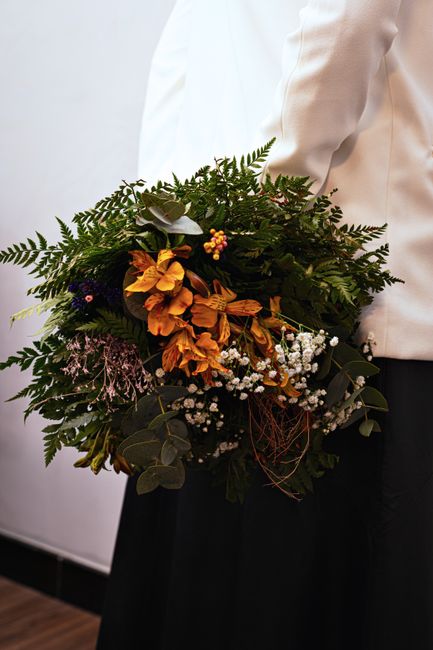
A bouquet is one of those wedding details that looks small until you stand near it for ten seconds. Then it changes the whole feel of the day. In a Hammersmith bride case study florist before and after bouquet, the "before" often means a mood board, colour inspiration, a few rushed screenshots, and maybe a slightly nervous conversation about budget. The "after" is where those ideas become a tangible, balanced bouquet that works with the dress, venue, season, and the bride's own style.
That difference matters because flowers are not just decorative. They show whether the florist understood the brief, handled the practicalities, and made sensible design choices. Did they keep the bouquet manageable to carry? Did they choose blooms that hold up well through travel, photos, and a long day? Did the colours actually suit the bride and the setting, rather than simply looking pretty in isolation? Those are the questions a good before-and-after case study can answer.
There is also a trust angle. A strong case study lets you see judgement, not just decoration. You are not only buying flowers; you are buying decision-making, timing, and calm execution on the day. To be fair, that calm part is half the job.
For couples comparing local options, it can be helpful to explore the broader service range too, especially if the bouquet is part of a larger floral plan for the ceremony or reception. If you want to understand how wedding florals are usually structured, a useful place to start is the wedding flowers page, which can help frame the bouquet within the bigger picture.
How Hammersmith bride case study florist before and after bouquet Works
The process is usually simpler than people expect, but only if the florist asks the right questions early. A proper before-and-after bouquet case study starts with the bride's starting point: style, venue, dress shape, colour preferences, seasonal flexibility, and any flowers to avoid. Then the florist translates that into a design direction. Not a vague "romantic" label. Something more concrete. Loose and natural? Tight and classic? Textured and modern? Soft whites with a few blush accents? Those details guide the result.
In practice, the workflow usually looks like this:
- Initial brief - the bride shares inspiration, practical constraints, and the overall wedding mood.
- Interpretation - the florist clarifies what is realistic, what suits the season, and what may need adjusting.
- Design development - flower types, stem lengths, colour balance, and shape are considered together.
- Construction - the bouquet is built with mechanics that support freshness and comfort.
- Before-and-after review - the original brief is compared with the finished bouquet to check whether the intent was met.
A useful florist does not simply recreate a Pinterest image. They interpret it. That distinction is huge. A bouquet that looks beautiful in a screenshot may fall apart in reality if the flowers are out of season, too heavy, or simply wrong for the bride's proportions. Likewise, a florist with real experience will sometimes suggest a slightly different bloom or a softer palette to make the bouquet work better on the day. Slightly annoying in the moment, perhaps. Usually the right call, though.
In a Hammersmith setting, the same principles apply whether the wedding is at a hotel, a riverside venue, a registry office, or a smaller intimate celebration. The bouquet has to look right in the room, in the light, and in the photographs. Morning light near a window and late-afternoon indoor lighting can make colours read differently. That is one of those tiny things people forget until they see the photos.
Key Benefits and Practical Advantages
There is a reason brides and planners like before-and-after examples. They make the florist's thinking visible. And that helps in a few practical ways.
- Clearer expectations - you can see how ideas are translated into a finished bouquet.
- Better budget decisions - you understand where money goes, whether into premium blooms, fuller structure, or more labour.
- More confidence in style matching - the bouquet should suit the bride, not just the trend.
- Fewer day-of surprises - good planning means fewer awkward moments when the bouquet arrives.
- Improved photos - the bouquet works with the dress, bouquet hold, and camera angle.
There is also a quieter benefit: reassurance. Wedding planning can make even organised people a bit jumpy. Seeing a real before-and-after transformation tells you the florist can turn notes and emotions into something practical and coherent. That matters more than people admit.
Expert summary: A strong bouquet case study is not about showing off flowers; it is about showing the florist's judgement. The best results look effortless because the planning behind them was not.
For brides comparing bouquet styles, it helps to think in terms of outcome. Do you want airy and romantic, structured and elegant, or compact and polished? Once you know that, the "after" becomes much easier to assess.
Who This Is For and When It Makes Sense
This topic is especially useful if you are:
- planning a wedding in Hammersmith or nearby West London
- choosing between florists and want proof of style consistency
- trying to understand how a brief becomes a finished bouquet
- working with a limited budget and need to see where the value sits
- interested in a specific floral look but unsure how it translates in reality
It also makes sense if you are a maid of honour, planner, or family member helping a bride compare options. Sometimes the bride has a strong sense of what she likes but no patience for the technical side. Honestly, that is normal. Not everyone wants to talk about stem wiring and flower conditioning over a cup of tea.
This kind of case study is less useful if you only want a quick price list. It is more about design quality, process, and fit. If you want a bouquet that feels personal rather than generic, the before-and-after format gives you a much better basis for decision-making.
Step-by-Step Guidance
Here is the most sensible way to use a florist case study when planning a bouquet.
1. Start with the bride, not the flowers
Think about the person first. Tall bride, petite bride, modern dress, vintage dress, veil, no veil, bold lipstick, soft makeup, classic venue, quirky venue. These details change the bouquet shape more than people expect. A bouquet that looks luxurious in the wrong hands can suddenly feel oversized or awkward.
2. Define the visual brief in plain English
Instead of saying "I want something elegant," try describing what elegant means to you. Do you mean clean lines, muted colours, premium flowers, lots of greenery, or a soft hand-tied shape? Plain language helps florists turn your ideas into a real design.
3. Check flower availability and seasonality
Some designs look amazing in theory but become awkward if the chosen blooms are difficult to source. A knowledgeable florist will explain substitutions honestly. That is not a downgrade by default. Often it is what keeps the bouquet looking full, fresh, and sensible.
4. Ask how the bouquet will be built
Mechanics matter. A bouquet needs structure, hydration, and balance. You do not need a technical lesson, but you do need confidence that the arrangement will survive transport and the ceremony. Especially if there is travel across London, a delayed schedule, or a warm room. Weddings have a funny way of compressing time.
5. Review photos of previous before-and-after work
Look for more than pretty finished shots. Ask: does the output feel consistent? Do the bouquets look comfortable to hold? Are the proportions natural? Is the style coherent across different brides and briefs? A single gorgeous image is lovely. Repetition across cases is better.
6. Confirm timing and handover
On the day, timing is everything. The bouquet should arrive fresh, not too early and not rushed at the last second. You want it ready when hair and makeup are nearly done, not while someone is trying to fasten buttons and answer a phone at the same time.
7. Evaluate the final result honestly
Ask whether the bouquet matches the original intent and whether it works in the real world. Does it feel easy to carry? Does it complement the dress? Does it hold together in photographs? A good before-and-after comparison should leave you feeling calm, not confused.
Expert Tips for Better Results
A few small decisions can make a large difference to the final bouquet. These are the sorts of details professionals quietly obsess over, because they know what happens when they are ignored.
- Choose one clear focal point. Too many competing blooms can make the bouquet feel busy.
- Think about scale. A bouquet should suit the bride's frame and the dress silhouette.
- Use colour with restraint. Two or three main tones often look more refined than six.
- Match texture to the mood. Soft petals, trailing elements, and airy greenery create a different effect from tight, sculpted stems.
- Prioritise comfort. If the bouquet is lovely but heavy, it becomes a prop rather than a pleasure.
- Allow for a little natural variation. Flowers are not factory pieces. A tiny difference in bloom size or opening stage can actually make the bouquet look more alive.
One practical tip that gets overlooked: check the bouquet against the dress in a real-size visual sense, not just on a phone screen. Screens flatten everything. A bouquet can look perfectly balanced online and slightly too dense in person. You notice it immediately once the dress is nearby.
And yes, it is fine to ask a florist to explain the "why" behind a choice. A good florist should enjoy that conversation, not dodge it. If they start sounding vague, that is useful information too.
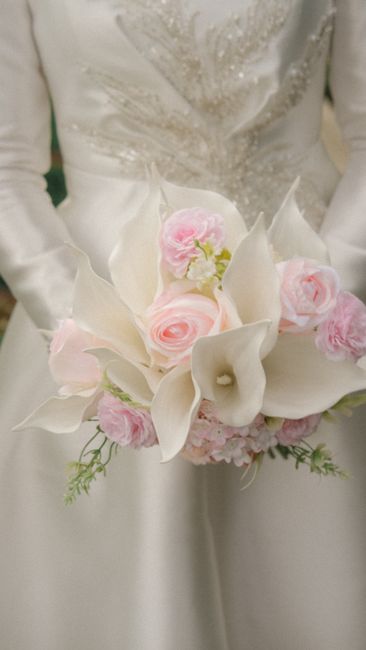
Common Mistakes to Avoid
Most bouquet disappointments are not dramatic failures. They are small misalignments that add up. The good news is that they are avoidable.
- Overusing inspiration images - a stack of screenshots is not the same as a clear brief.
- Ignoring seasonality - if a flower is awkward to source, the design may become unstable or expensive.
- Choosing based on trends alone - trendy is not always flattering.
- Forgetting practical handling - big blooms and long stems can be harder to carry than expected.
- Skipping the colour test - bouquet colours can clash with dress tone, lipstick, or venue lighting.
- Not confirming substitutions - if certain flowers are unavailable, you want to know what will replace them before the day.
One common mistake is treating bouquet design like a standalone art piece. It is not. It needs to work with a person, an outfit, and a schedule that may already be slightly chaotic by 10:30 in the morning. Truth be told, weddings rarely run like a neat spreadsheet.
Another subtle issue is asking for too much in too little space. A compact bouquet cannot hold every idea at once. The strongest florals are often the ones that know what to leave out.
Tools, Resources and Recommendations
You do not need fancy software or elaborate planning tools, but a few simple resources help enormously.
- Reference images - use a small, curated set rather than dozens of unrelated pictures.
- Venue photos - daylight, table settings, aisle width, and room tone all matter.
- Dress details - neckline, fabric texture, and length influence bouquet scale.
- Colour swatches - even basic fabric or digital swatches can keep everyone aligned.
- Notes on dislikes - allergies, scent sensitivity, texture preferences, or flowers you simply do not like.
If you are comparing floral styling approaches, it can also help to look at broader wedding design examples so you can understand how the bouquet fits into the full day. For a wider sense of seasonal styling and event floristry, the wedding flowers London homepage can be a practical starting point.
When reviewing a florist, do not only ask, "Is this pretty?" Ask, "Will this still work when the bride is holding it, walking with it, and appearing in photographs for hours?" Slightly less glamorous, perhaps. Much more useful.
Law, Compliance, Standards, or Best Practice
Wedding floristry is not heavily regulated in the way some trades are, but there are still sensible standards and responsibilities to keep in mind. A professional florist should handle flowers safely, communicate clearly about what is included, and avoid making misleading promises about exact blooms if the season or supply conditions make that uncertain.
From a practical standpoint, good practice usually includes:
- clear written or emailed agreement on the brief, date, and deliverables
- transparent discussion of substitutions if certain stems are unavailable
- safe handling and transport of fresh flowers
- reasonable care if fragrances, pollen, or sensitivities matter to the couple or guests
- honest lead times for design approval and final changes
If the wedding involves a venue with its own access rules, loading restrictions, or setup windows, those need to be respected. In London, that can be more relevant than people realise. A beautiful bouquet does not help much if the delivery timing is off or access is tight. So ask early, and keep the logistics simple where you can.
There is also a reputational standard at play. In wedding work, consistency matters. Florists are expected to communicate well, arrive prepared, and deliver what has been agreed as closely as conditions allow. That is just good professional practice, but it makes a big difference to the experience.
Options, Methods, or Comparison Table
When people talk about bouquet transformation, they often mean one of three approaches. Each has its place.
| Approach | What it looks like | Best for | Trade-off |
|---|---|---|---|
| Direct recreation | A close match to the inspiration image | Brides who already know exactly what they want | Can be limited by season, budget, or practicality |
| Inspired adaptation | The overall feel is kept, but flowers and structure are adjusted | Most weddings, especially when reliability matters | May differ slightly from the original picture |
| Creative interpretation | The florist uses the brief as a springboard for something more tailored | Brides wanting a more distinctive or editorial result | Requires a high level of trust in the florist |
In most real-world cases, the second option is the sweet spot. It protects the spirit of the brief while still making the bouquet workable. A pure copy can be lovely, but adaptation is often what produces the better result on the day.
If you are unsure which route suits you, ask for examples of each style. One bride might want a very literal before-and-after match. Another might prefer the florist to improve the design in small ways. Neither is wrong. The key is being honest about the goal.
Case Study or Real-World Example
Here is a realistic example of what a Hammersmith bride bouquet transformation might look like in practice.
A bride planning a late spring wedding in Hammersmith arrives with a few saved images: one bouquet with soft ivory roses, another with wild garden-style stems, and a third with pale blush peonies. At first glance the references do not perfectly match. That is very common. The florist's job is to find the thread running through them. In this case, it is softness, movement, and a romantic but not overly fussy feel.
Before: the brief is broad, the palette is a little uncertain, and the bride wants something elegant but easy to carry. She likes the idea of peonies, but the date sits close to the edge of their natural season. The bouquet also needs to work with a fitted dress and an indoor ceremony room that does not get a huge amount of daylight.
After: the florist creates a hand-tied bouquet with a soft white base, restrained blush accents, and airy texture rather than a very dense dome. The stems are kept neat, the overall shape sits comfortably in the bride's hands, and the final arrangement feels calm rather than crowded. A few elements are adjusted from the original vision, but the result is better for the actual wedding conditions. Better for the camera too.
What makes this a strong case study is not that the bouquet is complicated. It is that the florist solves several small problems at once: proportion, seasonality, transport, comfort, and visual balance. That is the real value of a before-and-after view. It shows the thinking behind the beauty.
And the funny thing? That is often the bit people remember after the day. Not the exact stem count. Just that the bouquet felt right in the hand, looked right in the photos, and somehow belonged to the bride from the first moment she held it.
Practical Checklist
Use this quick checklist before confirming a bouquet design.
- Have you described the wedding style in plain English?
- Have you shared dress details, venue context, and timing?
- Have you shown only the most relevant inspiration images?
- Do you know which flowers are in season or likely to be substituted?
- Has the florist explained bouquet size, shape, and handling?
- Have you confirmed any scent, allergy, or texture concerns?
- Do you understand how delivery and handover will work on the day?
- Have you asked how the bouquet will look in natural and indoor light?
- Do you know what happens if a bloom is unavailable?
- Have you checked that the final style suits the bride, not just the trend?
Practical takeaway: if you can answer most of these confidently, you are probably in good shape. If not, pause and clarify before the bouquet is made. It is much easier to refine the plan early than to wish for changes later.
Conclusion
A Hammersmith bride case study florist before and after bouquet is useful because it turns abstract wedding ideas into something concrete. You can see the brief, the decisions, the compromises, and the final result all in one place. That helps you judge whether a florist has real style, real judgement, and the practical sense needed for a wedding day that may be beautiful, emotional, and just a bit hectic. Which, let's face it, is exactly how the best weddings feel.
The strongest bouquets are not the loudest or the most expensive. They are the ones that suit the bride, the venue, the season, and the moment. If you keep that in mind, the "before and after" becomes more than a visual comparison. It becomes a sign that the florist understands what matters.
Get a free quote today and see how much you can save.
Frequently Asked Questions
What does a before-and-after bouquet case study actually show?
It shows how a florist turns a brief, inspiration images, and practical constraints into a finished bouquet. The best case studies make the design thinking visible, not just the final photo.
Why is a Hammersmith bride bouquet example useful for planning?
It gives you local context and a realistic sense of how the bouquet might work in a West London wedding setting, including transport, timing, and venue style.
How do I know if a florist understood my bouquet brief?
Look for clear feedback, sensible questions, and a finished bouquet that matches the mood, scale, and colour direction you discussed. If they repeat your ideas back in a sharper way, that is usually a good sign.
Should I choose seasonal flowers for my wedding bouquet?
Usually, yes. Seasonal flowers are often easier to source, fresher, and more reliable. They also tend to sit more naturally in the design, though a good florist can sometimes use out-of-season blooms if the brief and budget allow.
Can a florist make a bouquet look like my inspiration photo exactly?
Sometimes, but not always. Availability, budget, and flower condition all affect the result. A skilled florist will usually aim for the same feel rather than an exact copy, because that tends to work better on the day.
What should I ask to compare florists properly?
Ask about style consistency, seasonal alternatives, bouquet size, handover timing, and what happens if a flower is unavailable. That gives you a better picture than price alone.
How far in advance should I book wedding flowers?
As early as you can once the venue and date are fixed. Good florists often take bookings well in advance, and early planning gives you more room to refine the bouquet without rush.
Do bouquet case studies help with budgeting?
Yes, because they show where the value sits. You can see whether the cost goes into premium blooms, fuller styling, complex structure, or simply the labour needed to create the final look.
What if I do not know much about flowers?
That is completely fine. A good florist should translate your preferences into simple options. You only need to know the feeling you want, the colours you like, and a few things you definitely do not want.
Can a bouquet be too large for a bride?
Absolutely. A bouquet that is oversized for the bride's frame can look heavy and feel awkward to hold. Scale matters as much as flower choice, maybe even more than people realise.
What are the most common bouquet mistakes?
The biggest ones are unclear briefs, ignoring seasonality, choosing too many competing elements, and forgetting how the bouquet will look when carried and photographed for several hours.
Is it worth reviewing florist examples before booking?
Yes, definitely. Previous examples show how the florist handles different briefs in the real world. You want consistency, not just one lucky beautiful bouquet.
When the flowers arrive, the room changes. The room, the mood, the whole day. That is the quiet magic of good wedding floristry, and it is usually built long before the bride picks up the bouquet.